Corrosion Studies of Temperature-Resistant Zinc Alloy Sacrificial
In order to solve the problem of external corrosion of deep well casing in oil and gas fields, a new type of high-temperature-resistant zinc alloy sacrificial anode material was used.
ProCase — Gerosion
The goal of the project is to develop a sacrificial casing that can protect steel casings in geothermal wells against corrosion and high stresses due to thermal expansion so the structural integrity of the wells is
A New Method to Mitigate Annular Pressure Buildup by Using
This case study uses a deepwater well in Indonesia in order to apply the sacrificial casing method to mitigate the uncontrolled APB between the 20″ surface casing and 13 5/8″ production casing.
The Sacrificial Casing Project : Optimization and Design of a
This thesis project aims to design and optimize a new fastening mechanism for the Sacrificial Casing, a so called slip mechanism. The material selection and geometrical dimensions of the mechanism are
The Principle of Oil Well Casing Cathodic Protection Technology
Oil well casing cathodic protection technology: There are two types of cathodic protection technology: sacrificial anode cathodic protection and forced current (impressed current) cathodic
An Introduction to Sacrificial Anode Cathodic Protection
Sacrificial anode cathodic protection systems are also in some cases less costly to install and maintain than impressed current cathodic protection systems. This is particularly true for systems with small
PMMA sacrificial layer based reliable debonding of ultra-thin chips
The simple method presented here involves using a polymethylmethacrylate (PMMA) sacrificial layer between UTCs and the wax and the transfer or removal of UTCs is achieved without
Finite Element Modelling of a Novel Casing Protection for
Temperature data from a geothermal well in Iceland (HE-61) was used to analyze and compare three different drilling and production scenarios with and without the sacrificial casing in the well.
A New Method to Mitigate Annular Pressure Buildup by Using Sacrificial
In this study, the tubular design approach is used to mitigate the annular pressure buildup by utilizing a section of lower grade casing installed on the outer casing (sacrificial casing) that
Using Direct-Drill-in-API Pipe With Sacrificial Drill Bit:
3) Optionally installing a temporary casing if collapsible soil is encountered. 4) Upon reaching the desired depth, removing the drill rig while leaving the API pipe and
The Role of Sacrificial and/or Protective Layers to Improve the
Here the goal is to highlight the benefits and the large perspectives of using sacrificial/protective layers, with an emphasis on the pros and cons of such a strategy when targeting
Sacrificial Components
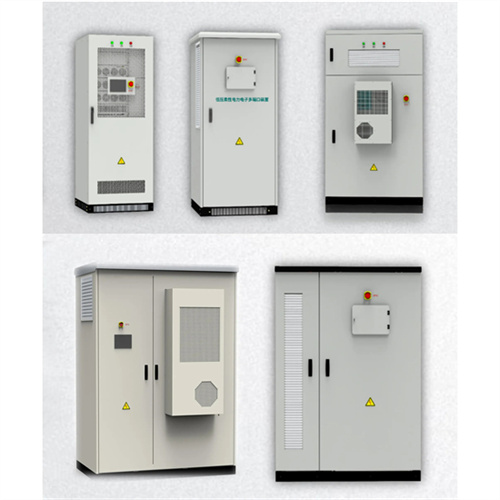
Transitions between diferent materials and assemblies the enclosure is significant. require thoughtful detailing to avoid premature failure. When those elements join, it is often the con-nection of these
Self-assembled monolayers as sacrificial capping layers
[0002] The present invention relates to semiconductor processing and semiconductor processing systems, and more particularly, to a method for forming self-assembled monolayers as sacrificial...
表面牺牲层技术_百度百科
表面牺牲层技术是硅基微机电系统(MEMS)制造的核心工艺之一。该技术通过在衬底上依次淀积牺牲层材料和结构材料,经光刻与腐蚀工艺形成悬浮可动微结
IADC/SPE-178854-MS A New Method to Mitigate Annular
In this study, the tubular design approach is used to mitigate the annular pressure buildup by utilizing a section of lower grade casing installed on the outer casing (sacrificial casing)...
Water-Soluble Sacrificial Layers for Surface Micromachining
Abstract This manuscript describes the use of water-soluble polymers for use as sacrificial layers in surface micromachining. Water-soluble polymers have two attractive characteristics for this app...
Optimisation of sacrificial anode cathodic protection system in
For chloride-contaminated reinforced concrete (RC) structures, sacrificial anode cathodic protection (SACP) is an effective method to control steel corrosion. However, some adverse
AUCSC Design of Galvanic CP Systems.pptx
After polarization, galvanic anodes tend to self-regulate and the current output at the anode bed will decline while protection is maintained. As a rule of thumb, the amount of current required to polarize
Sacrificial Layer Microfluidic Device Fabrication Methods
If this issue can be addressed, then sacrificial layer technologies offer promising potential to eliminate thermal bonding and thus facilitate the development of
Finite Element Modelling of a Novel Casing Protection for High
A novel casing protection, the Sacrificial Casing, could be used to decrease the maintenance costs of high-temperature geothermal wells, as well as protecting them from corrosion and high loads due to
4 FAQs about [Casing self-cooling with a sacrificial layer]
Can sacrificial casing mitigate uncontrolled APB?
This case study uses a deepwater well in Indonesia in order to apply the sacrificial casing method to mitigate the uncontrolled APB between the 20″ surface casing and 13 5/8″ production casing. A 20″ 154ppf X-56 section was selected as the sacrificial casing.
How to select a sacrificial casing?
In selecting the sacrificial casing, three main parameters are needed, these are; the reservoir condition, formation characteristic, and wellbore configuration. These parameters are fed to a wellbore thermal simulator/stress analyses software, in order to create the well model with related pressure and temperature conditions.
How can a sacrificial/protective materials approach be used in sintering?
Sacrificial/Protective Materials Approaches Combined with Spark Plasma Sintering In order to efficiently use SPS at temperatures not higher than 900 °C and in one step, the challenge is to manage the thermal and chemical gradients arising from both fast kinetics and a low oxygen partial pressure environment.
What is the sacrificial layer approach?
The use of the sacrificial layer approach was also considered at that time for manufacturing LTCC (low-temperature co-fired ceramic) ceramic MEMS to overcome the collapse of the structures or cavities during hot rolling and/or final firing.